usage
Arigatō Gozaimasu: A Practical Guide to Thank You in Japanese
Learn the difference between arigatō, arigatō gozaimasu, dōmo, and sumimasen, with natural examples for shops, gifts, help, and past favors.
ALL ARTICLES
Practical, sourced explanations of what Japanese expressions do in real situations—not just their shortest dictionary translations.
20 guides
usage
Learn the difference between arigatō, arigatō gozaimasu, dōmo, and sumimasen, with natural examples for shops, gifts, help, and past favors.

usage
Learn the literal and conversational uses of chotto, including soft requests, hesitation, and incomplete refusals without treating every use as ‘no.’

usage
Understand daijōbu as safety, reassurance, permission, acceptance, or polite refusal—and learn what to check before translating it.
usage
Learn when hai means yes, when it only acknowledges what was heard, and how Japanese answers to negative questions can confuse English speakers.
usage
Learn what ganbatte and ganbarimasu express, when they encourage, and why telling someone to try harder can sometimes miss what they need.
culture
Learn when to say gochisōsama deshita, what the phrase acknowledges, and how its use differs at home, as a guest, and in restaurants.
comparison
Compare gomen nasai, gomen, and sumimasen in personal, public, and workplace situations without reducing Japanese apologies to a politeness ranking.
culture
Irasshaimase means “welcome” in Japanese shops and restaurants. Learn why staff say it, whether customers should respond, and which replies sound natural.
culture
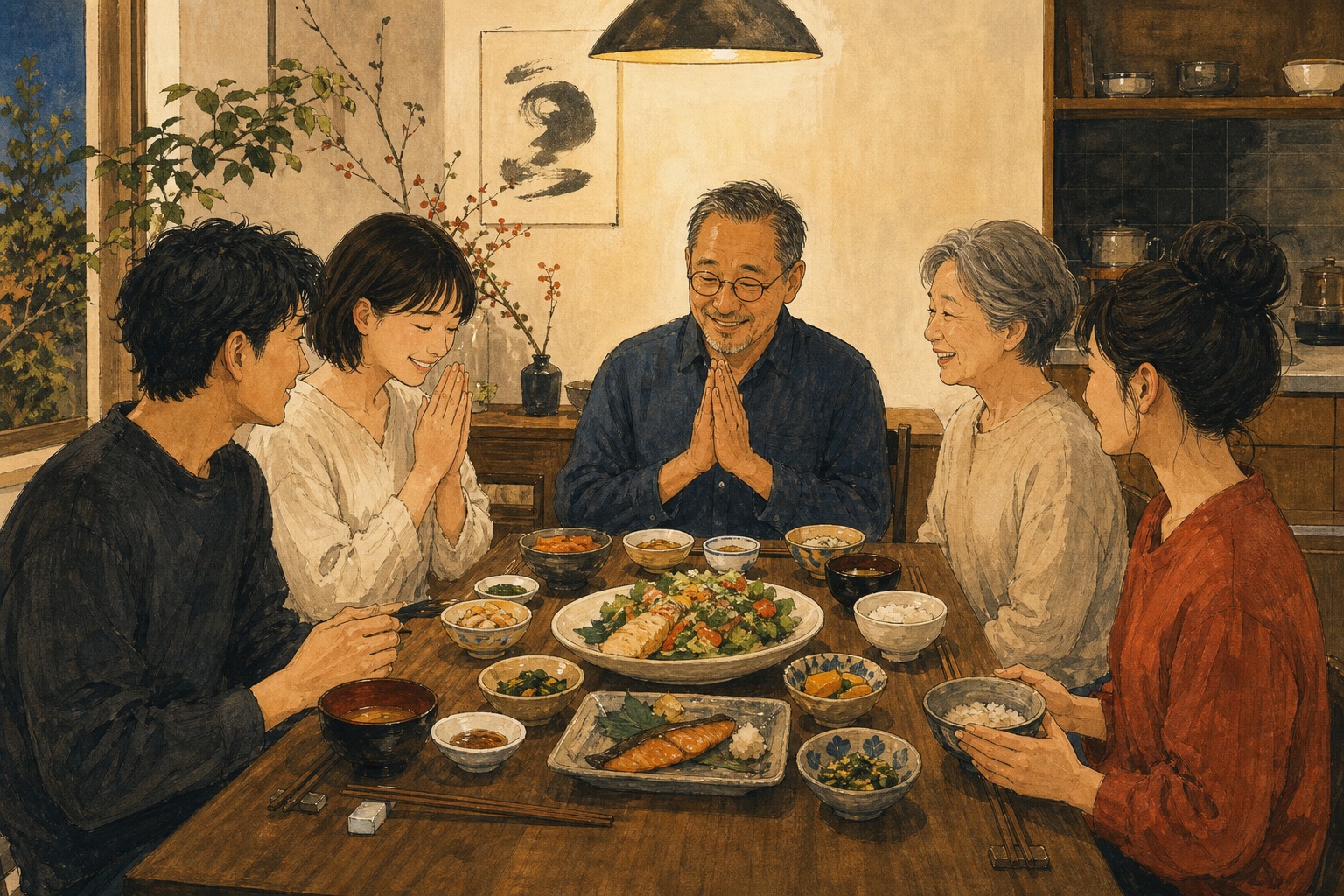
Learn what itadakimasu means, who or what it thanks, how it differs from bon appétit and grace, and when to say it before a Japanese meal.
culture
Itterasshai means “see you later,” “take care,” or “have a good day.” Learn how it answers ittekimasu when someone leaves and is expected to return.
comparison
Learn when to use kudasai or onegaishimasu for objects, services, and actions—and why neither expression is simply a more polite version of the other.
usage
Learn when moshi moshi is natural, who says it first, why it is mainly a telephone expression, and what to use in formal business calls.
culture
Understand mottainai in everyday Japanese—from wasted food and unused opportunities to praise that feels undeserved—without turning it into a cultural slogan.
usage
Learn when to use ohayō gozaimasu, konnichiwa, and konbanwa—and why workplace relationships and first meetings matter as much as the clock.
culture
Okaeri means “welcome back” or “welcome home.” Learn who says it, how it differs from okaerinasai, and how it pairs with tadaima in Japanese.
culture
Explore what omotenashi means, how it relates to service and guests, and why it should not be treated as a claim that Japanese hospitality is flawless.

usage
Learn what otsukaresama means, why coworkers say it throughout the day, and when its most common English translations miss the point.
culture
Understand shōganai as recognition of limited options, how it can comfort or dismiss, and why it does not prove a uniquely fatalistic worldview.

usage
Learn why sumimasen can apologize, get attention, and express indebted thanks—and how context determines the most natural English translation.

usage
Learn what yoroshiku onegaishimasu means in introductions, requests, projects, and emails—and why no single English translation fits every use.
No guides match that search. Try a Japanese word, an English meaning, or another topic.